
Consider an electric vehicle partnership between Ford Motor, Apple and Lear. For the moment, it’s just wishful thinking, but imagine the possibilities: It would be a formidable business combination that could put a serious dent in the EV competition in North America.
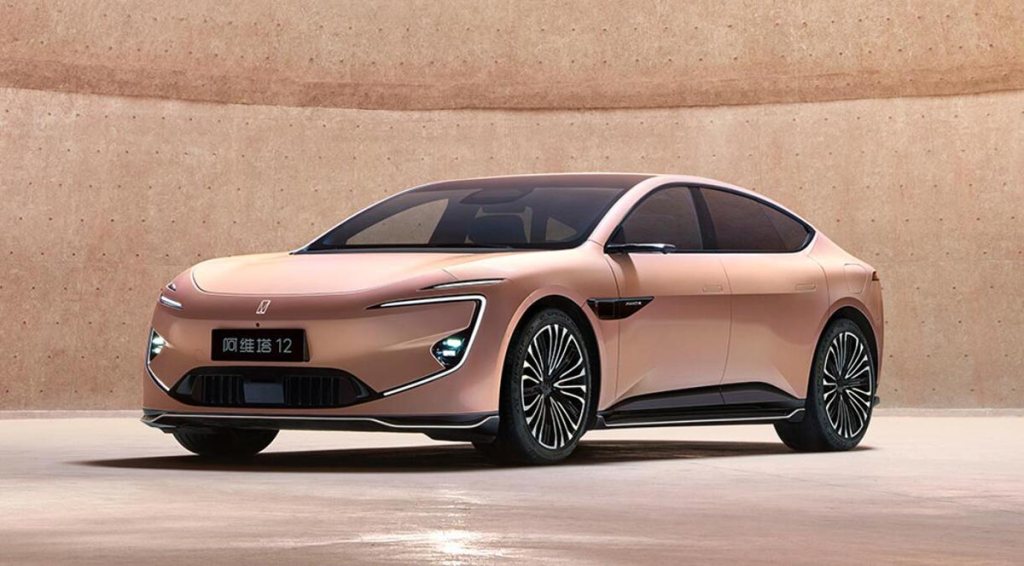
Now meet the oddly named Avatr, a new Chinese auto brand that has just relaunched its sleek Avatr 12 electric sedan with a starting price under $37,000, according to CNEVpost.com.
Beyond the eye-popping design and attractive sticker, the Avatr 12 bundles an array of advanced technology, including lidar-assisted ADAS, digital cockpit and a 95kWh lithium-ion battery pack that provides a driving range of more than 400 miles.
How is this possible for a relatively young company whose first production vehicle was introduced less than two years ago?
The Avatr 12 is the offspring of three Chinese corporate parents — state-owned automaker Chang’an, battery giant CATL and tech megalith Huawei.
Remember that “formidable business combination” I teased at the top of this post? This is already happening in the Chinese auto industry, and Avatr is not the only example.
In this instance, Chang’an, CATL and Huawei clearly have benefitted from local, regional and central government incentives, both financial and regulatory. The arrival of the updated Avatr 12 is no less a remarkable achievement, even with that uniquely Chinese tailwind.
Perhaps it’s time for our own state and federal government policymakers to consider how to promote and support similar partnerships in the United States. The Inflation Reduction Act and related legislation provided a good start.
What other pages can we borrow from China’s playbook to develop new partnerships with similar capability and potential in the US?
 felixstrategy.com
Leave a comment